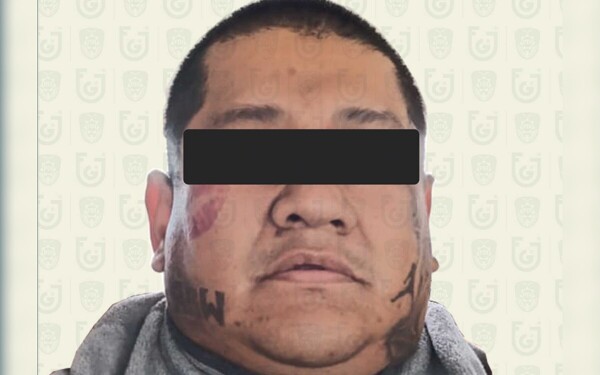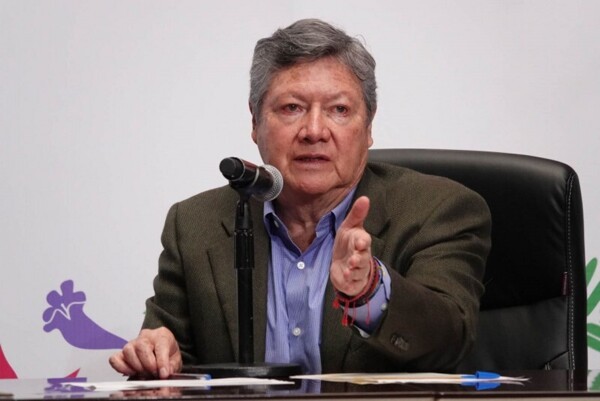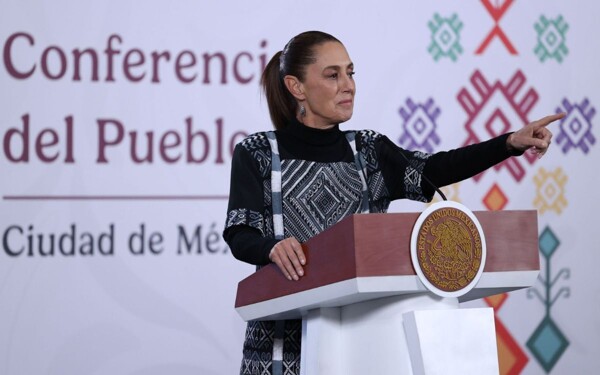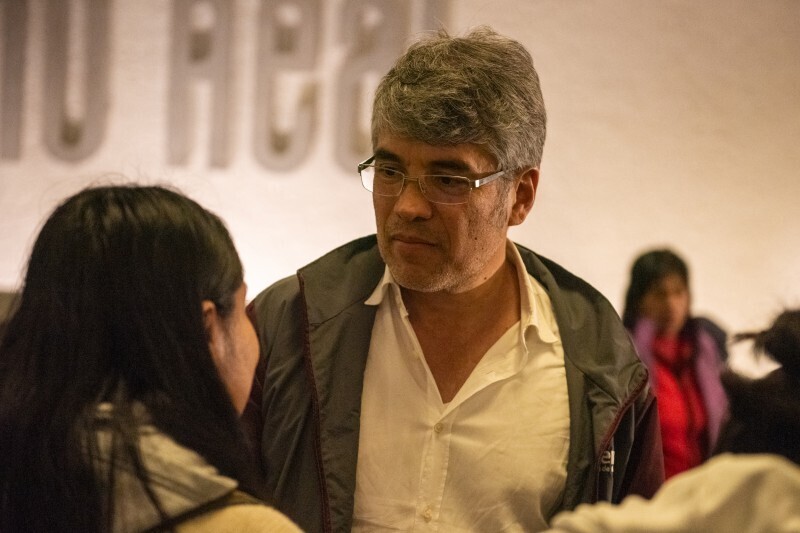
As on previous occasions, scenes of violence have exposed the Mexico City government, where shifting responsibilities and discomforts among the involved groups are growing. A source within the Mexico City government, aware of this Sunday's assembly, pointed to the Secretary of Citizen Participation, Tomás Pliego, and the Secretary of Government, César Cravioto, the two pillars of the capital government's political operation. However, these groups were not considered when deploying the political operation and maintain their opposition to the projects. As happened in Xochimilco, the figures now in the spotlight are the Secretary of Citizen Participation, Tomás Pliego, and his counterpart in Government, César Cravioto, two of the head of government's most trusted men, to whom she delegates the political management of her projects and assemblies. However, precedents in Xochimilco, Álvaro Obregón, and Cuajimalpa—where the Utopia project is also not advancing—have generated a wave of criticism before the current administration's first year ends. 'The issue was not ironed out before the assembly,' the source stated, pointing to the same actors who have already been blamed for missteps in Xochimilco and Álvaro Obregón, where Clara Brugada's Utopia also faces serious problems. Due to the low turnout, Morena considers that 'the destabilization by Generation Z failed.' According to this source, the sectors trying to prevent the construction of the new Cablebús line are landowners who exploit the communal land use of the lands that would be used for the works, which allows them to enjoy a series of tax benefits. As is customary, many of these citizen consultations do not go as expected. As is customary in the head of government of CDMX, Clara Brugada's administration, the major projects she promotes are consulted with the citizenry to receive their support and accompaniment. As has happened other times, the outcome was not the desired one: a group of residents rejected the initiative and tried to break up the meeting to prevent its progress, which led to a brawl and the use of pepper spray by authorities who tried, in vain, to restore order. Faced with this new scenario, they fear that the land classifications may change and they will lose these rights, something the ruling party dismisses as unlikely to happen. For example, similar images occurred in Xochimilco when discussing the first Utopia that Clara Brugada seeks to build in the demarcation and which was ultimately rejected in a popular vote, leaving the initiative stalled. This also generated the blockade of the Xochimilco-Oaxtepec highway as a form of protest. An operation against extortion in CDMX left one police officer injured and six detained. This is not the first time that a citizen's assembly has ended badly for the ruling party. This Sunday was the case, for example, of the assembly held in Milpa Alta to build Line 6 of the Cablebús, which ended in a brawl and exposed the capital's ruling party. This Sunday, in the San Francisco Tecoxpa plaza, a citizen's assembly was held to achieve the citizen accompaniment for Cablebús Line 6, which will connect Milpa Alta with Tláhuac over 12.6 kilometers.